The Republic of Texas Space Force designed and deployed the F-23 Super Sabre not long after War’s End. It incorporated all of the lessons Texas had learned during The War into a single fighter that could, theoretically perform any mission assigned to it. The laser and missile arrays could engage in everything from ground attack to space superiority missions, while the single spinal gravitic cannon could penetrate even warship deflection grids when operating in squadron strength. The Super Sabre was the largest fighter in widespread usage, due largely to the small living space hidden behind the cockpit. Texas planned to use it for extended interstellar patrols, and wanted their pilots to arrive rested and ready to fight. The Super Sabre quickly became the dominant multi-role starfighter in Texas service, a position it maintained to good effect with consistent minor and major updates over the decades of peace we saw after War’s End.
The Republic of Texas Space Force operated the B-17 Valkyrie throughout The War, with successive point updates to cover up deficiencies in the rushed design. They promised an upgraded production version every year as The War continued, but retooling was difficult and the lost production time would have badly affected deployment. So they continued to build the Valkyries until they drove the Shang from the Hyades Cluster. Only then did Texas authorize the construction of the new B-25 Super Valkyrie that included every major update and lesson learned during the Valkyrie’s two decades of front line service. The first of them technically saw service before War’s End, but most military historians consider them a Post War design, as they saw no major combat actions. Very few were built before War’s End, and the factories were shut down afterwards. Those Super Valkyries, and the many Valkyries rebuilt to their standard, became Texas’ primary bomber in the decades of peace that followed.
The Republic of Texas Space Force greatly wished a new series of homegrown hypercapable attack and fighter craft to go along with their Valkyrie bombers. Texas was getting its Texas on when it replaced the older Vigilante’s autocannons with gravitic cannons and renamed it the A-10 Righteous Vigilante. It was a mouthful of a name that was quickly truncated by almost everybody. The absolutely new F-15 Sabre sported a quartet of missile launchers along with a single gravitic cannon so it could handle more mixed missions. Both designs received their baptism of fire in the Hyades Cluster, where mixed hypercapable forces quickly moved through the close systems of the Hyades Core in a serious of feinting and slashing assaults. It is one of the crowning moments of Space Force history that they drove this campaign clear through to War’s End.
The Republic of Texas Space Force welcomed the F-12 Avenger with open arms. It did hit the “not invented here” problem, but they wanted a hypercapable fighter badly enough that they were willing to hold their noses and license the fighter for their own factories to build. The Avenger was too large to be a true fighter, an issue many noted at the time, so it was mostly used in the attack or bomber roles alongside the B-17 Valkyries that became their closest allies. Mixed Avenger and Valkyrie forces quickly became Texas’ weapon of choice when attacking enemy starships, and they racked up impressive kill numbers when those starships came in range. And since both craft were hypercapable, they could reach out and crush someone at a range far greater than anyone had previously dreamed.
The Republic of Texas Space Force had been working on a new generation of bomber for years when The War began. Most bombers mounted single-shot anti-ship missiles, or other heavy weapons, on external hard points at the time, but Texas wanted a hypercapable bomber with internal, capital missile launchers. They were experimenting with both the weapons and the hyperdrive when The War forced them to rush what they had into production. The B-17 Valkyries quickly gave the Space Force the one thing it had always lacked. The ability to send their units to other star systems without requiring a Navy transport to get them there. That ability would fundamentally change the function of the Republic of Texas Space Force throughout The War and after War’s End.
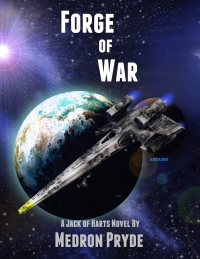
Forge of War on Amazon
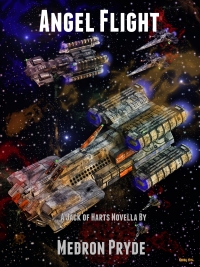
Angel Flight on Amazon
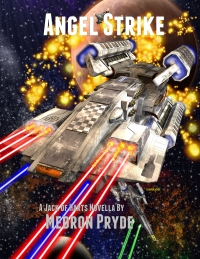
Angel Strike on Amazon
Angel War on Amazon
Wolfenheim Rising on Amazon
Wolfenheim Emergent on Amazon