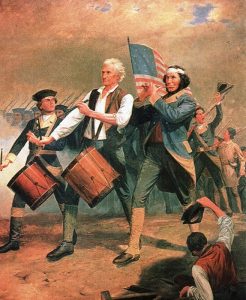
For a nation less than two hundred and fifty years old, we have a lot of anniversaries. Flag Day. The Army’s birthday. The Navy, the Marines, the Air Force. Now the Space Force. Great battles won and lost. Presidents and Civil Rights leaders. Tea parties and great speeches. The liberations of slaves. You can tell a lot about a country by what bits of history are preserved in holidays and monuments. Who is venerated, and who is forgotten.
We built monuments for Washington who freed us from British oppression. And for Lincoln who freed the slaves here in America nine decades later. For the soldiers who fought to save a succession of countries from invasions that would have toppled them. For great explorers and those who helped slaves escape down underground railroads. For famous colored regiments and buffalo soldiers. And yes, in certain areas of the country, monuments were built to celebrate those who fought and lost a war for their own independence.
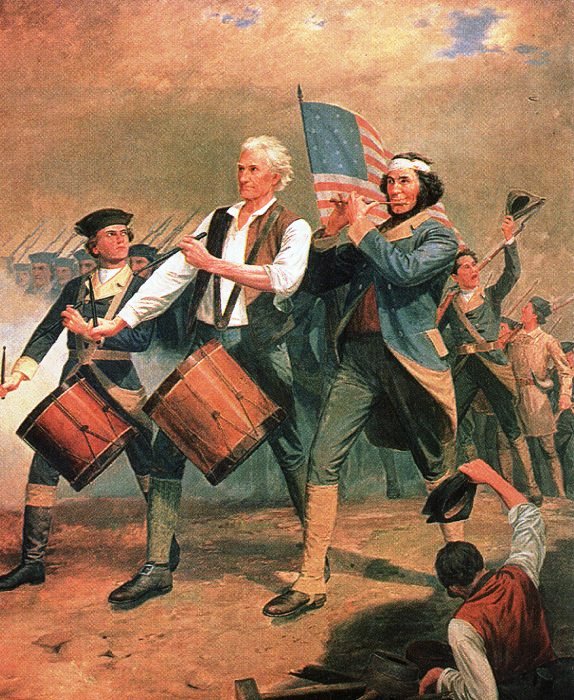
I used to sign my e-mails and my forum posts with the words “I’m going to tea party like it’s 1776.” It was a play on words, of course. The Prince song. Our own Boston Tea Party, and the signing of our Declaration of Independence. The anniversary of which is coming soon. And the two and a half centuries of progress and promise that have come out of it. I even wore a tea bag on my hat as a joking reference to the whole thing.
But not everybody liked that. People mocked me. They tore the tea bag off my hat while I was wearing it. On one forum, after some years of having it in my signature, I suddenly received an official warning for daring to have such a political statement and the moderators manually removed it from my account. On the week I found out my uncle, a Veteran of Foreign Wars, had cancer and I was driving back and forth to his hospital all week. That was not a good week.
The simple fact is that some people attack those who believe this is a great nation. That we have done great things in our two and a half centuries of life. They don’t want us to remember what we’ve done. The promises we’ve made and the steps we’ve taken. The legacy of our bold statement those centuries ago that “All men are created equal,” the bold promise decades later that we would “not perish from the earth,” and the bold dream decades later that our children would “one day live in a nation where they will not be judged by the color of their skin, but by the content of their character.”
We are not perfect. But we are great. And we can become greater if we keep our minds to the task. We must forever remember the spirit and the promises of 1776, 1862, and 1963 if we are to live up to our ability. Even if that means we must stand against those who do not believe in that spirit and those promises.


 Forge of War on Amazon
 Angel Flight on Amazon
 Angel Strike on Amazon
 Angel War on Amazon
 Wolfenheim Rising on Amazon
 Wolfenheim Emergent on Amazon