The Republic of Texas Navy continued their mission of carrying Space Force or Marine starfighters to battle after Contact. The vast majority of their ships were Houstons or Laredos, though they also kept limited numbers of light carriers like the Republics or the Rangers. The new gravtech gave both ships and fighters far longer ranges than before, and offered entirely new doctrines in every phase of warfare. Texas was quick to test the fighter combat doctrines, and the lessons they learned were quickly incorporated into the United States Navy as well. While never the heaviest navy by tonnage in the United States, the Texas Navy’s starfighter doctrine became second-to-none in the decades leading up to The War.
The Republic of Texas Navy’s Abilene-class long-range exploration cruisers were spread out all over explored space, dedicated to expanding that area in the last two decades, when the Peloran made Contact. They brought with them hyperdrive and gravitic technologies that made the Abilene obsolete overnight. But the Abilene fleet was a significant investment in time and materials, so they were ordered home to Earth or Dallas for refitting. Once operational with the new technologies, they went back out to explore space again for decades more to come. The newer Houston and Laredo designs replaced them eventually, leaving them to molder away in the reserves. Then one day a Texas Ranger needed a fast ship and no questions asked. He requisitioned an Abilene for a trip that would change the Abilene’s fate forever. He liked the ship, he wanted to keep the ship, and he convinced Texas Ranger leadership to purchase the remaining Abilenes for Ranger use. The Rangers have used them ever since.
The Republic of Texas Navy was willing to accept escort and patrol duty as a way to get into space, but they wanted to do so much more than that. The Space Force could keep its short-duration flag-planting missions. The Navy wanted to do long-term space exploration. They managed to get some assignments to do that, but their deep space cruisers turned out to not be deep space enough for truly extended missions to the stars beyond Dallas. They built a number of improvements into them over the years, and designed entire new classes of ships devoted to the mission of exploration. The Abilene-class long-range exploration cruiser was the pinnacle of that effort. Brought into service in 2183, the Abilenes sported the fastest hyperdrive of the time, the largest fuel bunkers compared to their size, the best crew quarters for long-term deployments, and the most advanced scientific equipment for a ship of exploration. They also had docking mounts for six fighters, or the small exploration and landing craft the Navy was building for exactly this kind of scouting mission. The Abilenes quickly became the Texas Navy’s flagship class of exploration cruisers, and they had spread throughout the frontier of explored space when the Peloran made Contact.
The Republic of Texas Navy’s primary spacegoing mission for decades was securing the New Earth-Dallas Hyperspace Run. They escorted supply and personnel convoys to the new colony, and patrolled for State-sponsored raiders looking for easy prey. Their deep space cruisers the size of modern-day frigates carried minimal onboard weaponry compared to modern starships. Beyond a few onboard lasers and missile launchers, their primary combat power consisted of the strike fighters they carried into firing range. The fighters were extremely short-legged compared to modern starfighters, and so they usually stayed close after launching and linked their systems with their starship for coordinated attack and missile defense. This tactical doctrine still dominates modern combat, and has been adopted by all major powers.
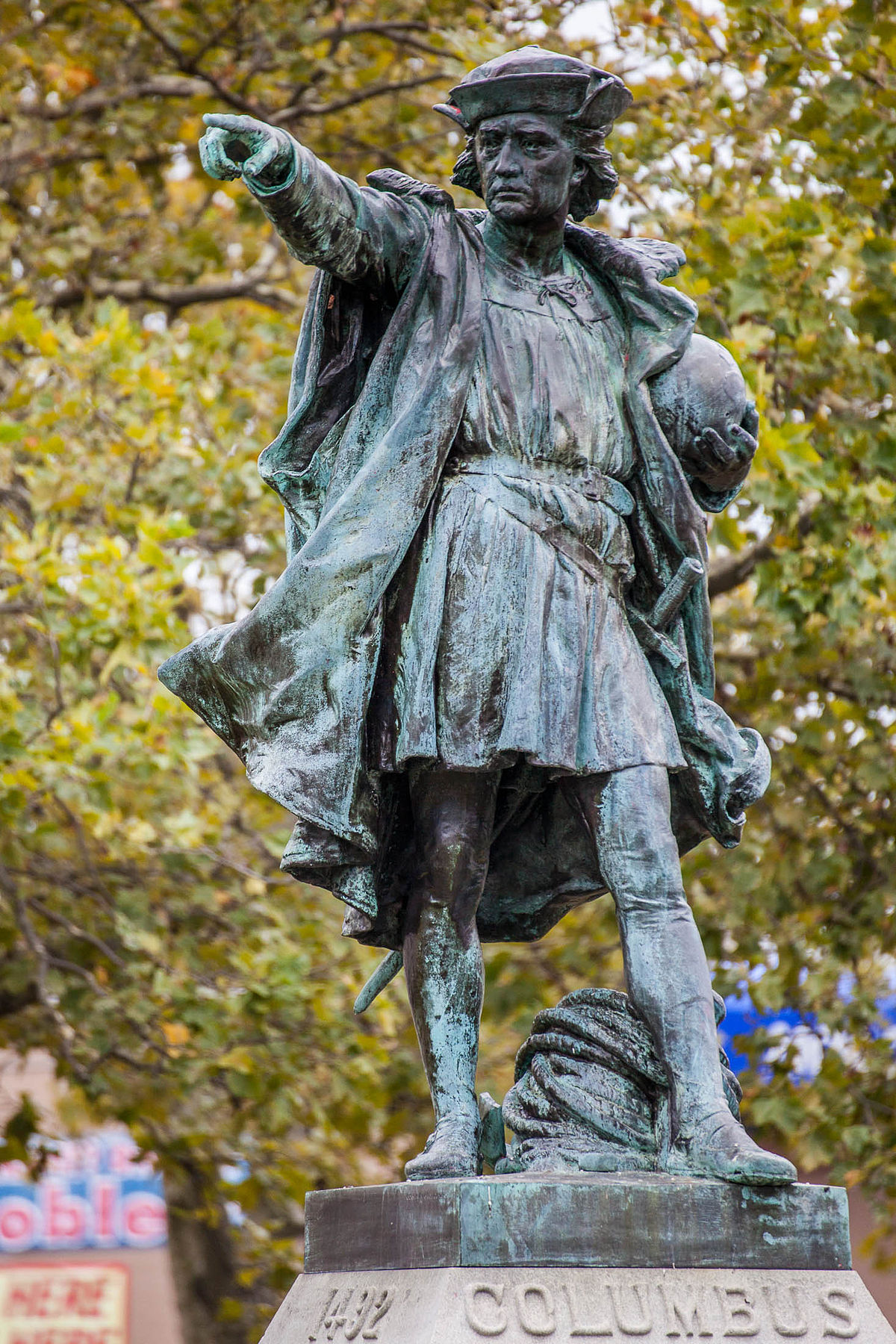
In fourteen hundred ninety two, Columbus sailed the ocean blue.
I learned that rhyme as a child, and it has always stuck with me.
He was part of the Age of Exploration, when Europe started looking outward again. They had rebuilt from the Fall of Rome and Muslim Invasions that shattered much of Southern Europe. The Spanish crown was actually in the process of liberating the last of the Muslim conquests in Spain as Columbus sailed. The Black Death that had wiped out a third of Europe was over a century in the past.
It was a new age of looking beyond immediate survival and wondering what was out there, beyond the borders of the tiny kingdoms that still survived. Discovering new places and revisting ones long lost to legends. Columbus sought to find a new route to India, not realizing that what we would call the Americas completely blocked his path there. But he did find his way here, and he ushered in a whole new age for America.
And in our modern age, we still admire his courage and determination to explorer. We’ve taken that as the ethos of America. We look for new ways of doing things, and for new places to see. Just as we imagine Columbus did.
So Happy Columbus Day. May you see something new to you today.

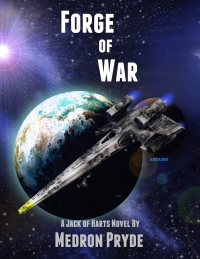
Forge of War on Amazon
Angel Flight on Amazon
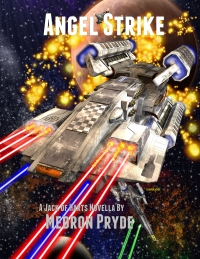
Angel Strike on Amazon
Angel War on Amazon
Wolfenheim Rising on Amazon
Wolfenheim Emergent on Amazon