It should be noted that Texas maintained a permanent ground presence at Davis-Monthan Air Force Base throughout the Drug Wars and beyond. They repaired the runways and continued the work of refurbishing as many functional aircraft as they could find deep into the Cybernetic Wars. More resilient to Rogue AI hacks, refurbished craft coming from the Boneyard made up the majority of craft deployed against that threat, and many military historians point to them as one of the reasons we survived at all. And though the relentless salvage missions came to an end in time, the Republic of Texas maintained control of the base in the years and decades that followed. It was a good place to retired their aircraft for future emergencies, after all. And as the exploration of the solar system and the stars beyond become more commonplace, Davis-Monthan Spacebase served as one of the Republic’s primary launching and landing sites. It even served its original purpose when the Shang attacked us, and technicians swarmed all over the Boneyard looking for craft they could refurbish for use against our new enemy. And so Davis-Monthan continues to protect humanity even now.
The Second Great Depression was the emergency Davis-Monthan Air Force Base was built to serve. No one knew that when it was built, but the Boneyard of retired aircraft it housed would become the arsenal of freedom for the Republic of Texas. Some uncharitable souls would say they plundered the base. Texas called it Operation Finders Keepers. The United States had closed the base. The United States had stopped paying the private security watching the base. There was nobody in position to keep the old war machines from falling into the wrong hands. It was clearly their patriotic duty to rescue any serviceable craft and parts before someone with ill intent used them against America. The federal government did not see it the same way, of course, but they did not have the resources to stop Texas from taking everything they thought they could possibly use. And Texans have a reputation for thinking they can use a great deal more than others think they can.
Davis-Monthan Air Force Base was most famously the home of the United States Air Force Boneyard, the place where old aircraft took their final flight before retirement. They were officially a ready reserve of aircraft against a future emergency, but the Air Force often stripped them of spare parts to keep other aircraft operating. Especially during periods of budget cuts when various peace dividends and new social contracts demanded that politicians take money from the military to pay for far more worthy social spending. It was those budget cuts that eventually closed Davis-Monthan a decade before the Second Great Depression. The squadrons that called it home were moved or retired with the base, but the Boneyard remained. Davis-Monthan remained an official Air Base, patrolled by local security consultants, but every aircraft that landed there was never meant to take off again. They were the final reserve of a United States Air Force slowly losing prestige, funding, and power to the far sexier and younger Space Force.
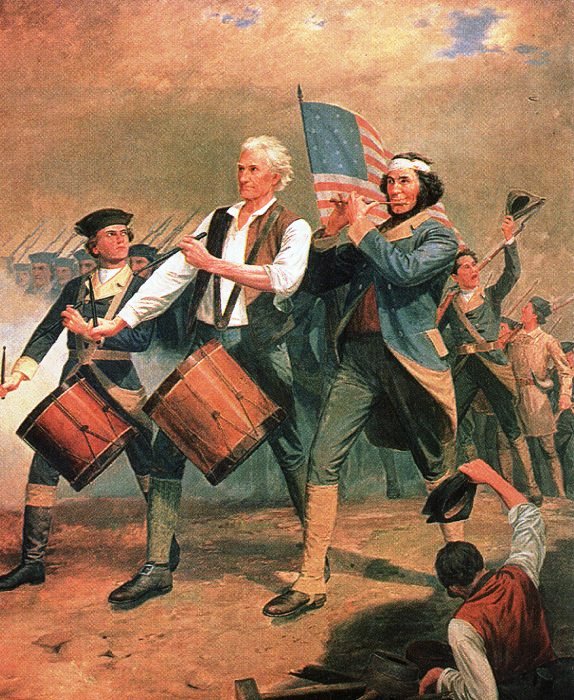
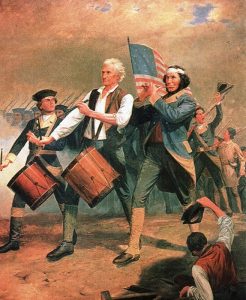
For a nation less than two hundred and fifty years old, we have a lot of anniversaries. Flag Day. The Army’s birthday. The Navy, the Marines, the Air Force. Now the Space Force. Great battles won and lost. Presidents and Civil Rights leaders. Tea parties and great speeches. The liberations of slaves. You can tell a lot about a country by what bits of history are preserved in holidays and monuments. Who is venerated, and who is forgotten.
We built monuments for Washington who freed us from British oppression. And for Lincoln who freed the slaves here in America nine decades later. For the soldiers who fought to save a succession of countries from invasions that would have toppled them. For great explorers and those who helped slaves escape down underground railroads. For famous colored regiments and buffalo soldiers. And yes, in certain areas of the country, monuments were built to celebrate those who fought and lost a war for their own independence.
I used to sign my e-mails and my forum posts with the words “I’m going to tea party like it’s 1776.” It was a play on words, of course. The Prince song. Our own Boston Tea Party, and the signing of our Declaration of Independence. The anniversary of which is coming soon. And the two and a half centuries of progress and promise that have come out of it. I even wore a tea bag on my hat as a joking reference to the whole thing.
But not everybody liked that. People mocked me. They tore the tea bag off my hat while I was wearing it. On one forum, after some years of having it in my signature, I suddenly received an official warning for daring to have such a political statement and the moderators manually removed it from my account. On the week I found out my uncle, a Veteran of Foreign Wars, had cancer and I was driving back and forth to his hospital all week. That was not a good week.
The simple fact is that some people attack those who believe this is a great nation. That we have done great things in our two and a half centuries of life. They don’t want us to remember what we’ve done. The promises we’ve made and the steps we’ve taken. The legacy of our bold statement those centuries ago that “All men are created equal,” the bold promise decades later that we would “not perish from the earth,” and the bold dream decades later that our children would “one day live in a nation where they will not be judged by the color of their skin, but by the content of their character.”
We are not perfect. But we are great. And we can become greater if we keep our minds to the task. We must forever remember the spirit and the promises of 1776, 1862, and 1963 if we are to live up to our ability. Even if that means we must stand against those who do not believe in that spirit and those promises.
McAlester Army Ammunition Base became the first of its kind after the Convention of States reformed the federal government. It had been an American base before the Second Great Depression, and it remained an American base afterwards. Its munitions flowed to military commands all over America, and then to Australia and Indonesia as the Chinese invasion forces crushed one country after another. And they proved invaluable when it came to fighting the Singapore Collective. What made McAlester unique at first was its dual nature. It was officially part of the new United States federal government support structure, but surrounded by the new Republic of Texas. Rather than choose sides, it provided support to military forces serving either flag. They were all Americans after all. Other bases all over American quickly followed their example, and that duel nature provided a blueprint for the future of the reborn United States of America.

Forge of War on Amazon
Angel Flight on Amazon
Angel Strike on Amazon
Angel War on Amazon
Wolfenheim Rising on Amazon
Wolfenheim Emergent on Amazon