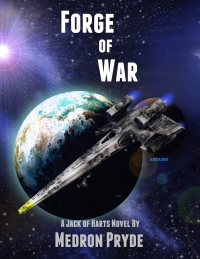
The Republic of Texas Navy’s primary spacegoing mission for decades was securing the New Earth-Dallas Hyperspace Run. They escorted supply and personnel convoys to the new colony, and patrolled for State-sponsored raiders looking for easy prey. Their deep space cruisers the size of modern-day frigates carried minimal onboard weaponry compared to modern starships. Beyond a few onboard lasers and missile launchers, their primary combat power consisted of the strike fighters they carried into firing range. The fighters were extremely short-legged compared to modern starfighters, and so they usually stayed close after launching and linked their systems with their starship for coordinated attack and missile defense. This tactical doctrine still dominates modern combat, and has been adopted by all major powers.
In fourteen hundred ninety two, Columbus sailed the ocean blue.
I learned that rhyme as a child, and it has always stuck with me.
He was part of the Age of Exploration, when Europe started looking outward again. They had rebuilt from the Fall of Rome and Muslim Invasions that shattered much of Southern Europe. The Spanish crown was actually in the process of liberating the last of the Muslim conquests in Spain as Columbus sailed. The Black Death that had wiped out a third of Europe was over a century in the past.
It was a new age of looking beyond immediate survival and wondering what was out there, beyond the borders of the tiny kingdoms that still survived. Discovering new places and revisting ones long lost to legends. Columbus sought to find a new route to India, not realizing that what we would call the Americas completely blocked his path there. But he did find his way here, and he ushered in a whole new age for America.
And in our modern age, we still admire his courage and determination to explorer. We’ve taken that as the ethos of America. We look for new ways of doing things, and for new places to see. Just as we imagine Columbus did.
So Happy Columbus Day. May you see something new to you today.
The Republic of Texas Space Force thought it had outsmarted the Navy when it demanded that all new Navy ships carry fighters. The Navy did not operate its own fighters, and had always relied on Air Force or Marine fighters to protect them. So the Space Force knew that demanding the Navy carried fighters would allow them to operate off Navy ships without all the boring drudgework of maintaining them. And it would cement their position as the superior space military arm. That is what happened in most cases, but the Texas Marines had their own say in the matter as well. They did not have as much expertise operating in space as the Space Force did, but they had far more experience operating fighters off ships. And they did operate some aerospace fighters retired by the Space Force many years before. The Marines put their foot in the door and managed to get some of those squadrons assigned to spacegoing Navy ships after passing tests no one else thought they could.
The Republic of Texas Navy sat on Earth, defending Texas shores and shipping throughout the early 2100s. Time and again, they attempted to secure funding to expand their operations into space, like most of the other national navies already had, but Texas had a perfectly good Space Force and did not wish to spend more resources on a glorified military passenger service. Colonization of the Dallas system, and the need to defend shipping going back and forth from there, changed everything for the Navy. They had experience in large ships and long patrols, and they were willing to take any excuse to get into space. The Space Force didn’t want that job, so agreed to support the new initiate. On one condition. All Navy ships must carry fighters. The Navy accepted that stipulation, and quickly began assembling the beginnings of a genuine long-endurance space fleet to patrol the New Earth-Dallas Hyperspace Run.
The Republic of Texas Space Force charted their path into space and the stars as time went on. They were made of small ships, often commanded by lone astronauts who came home between missions to press the flesh and encourage wealthy donors to provide more money in support of further explorations. If the Texas Space Force had any weakness, it was that their culture and experience enshrined the idea of going places and then coming back. What was in between was of little notice to them, and staying there held no interest to them. So they surveyed the Xi Bootis system, and secured the Dallas colony that took it over in 2145. They escorted numerous claim jumpers out of the system in those days, and proved singularly successful in that mission. But they did not explore the space between Dallas and Alpha Centauri. The glorified Space Force fighter jocks were not interested in sitting in the vast void watching nothing happen.

Forge of War on Amazon
Angel Flight on Amazon
Angel Strike on Amazon
Angel War on Amazon
Wolfenheim Rising on Amazon
Wolfenheim Emergent on Amazon