The Dallas/Fort Worth/Arlington Metroplex spent months sliding into the worst excesses of the Second Great Depression. It started with protests against the old President’s handling of the latest Chinese Flu and the economic impacts of his China policies before the Impeachment. They turned to celebrations after he was kicked out, and then back to protests when the federal forces failed to arrest him. The Metroplex mayors always supported the “peaceful protests,” even as the nights grew more violent, deadly, and destructive. They refused to share information with Texas law enforcement agencies, and publicly ordered the Texas Rangers out of their cities. They refused to cooperate with any warrants or perform any paperwork pertaining to State cases, and released anyone the State detained whenever they gained custody. The new President supported their policies at every turn, publicly spotlighting their mission to drive the evils of systemic racism and so many other sins against humanity from Texas once and for all. The largest target in their crosshairs was the military-industrial complex epitomized by the Fort Worth Joint Reserve Base in the heart of their cities. They wanted it out of their cities, and they did everything they could to drive the base to leave. When that didn’t work, they tried to burn it out by aiming the protestors, gangs, drug cartels, and anarchists at the base.
One of the things that amazes me about writing is just how crazy things can get. Or rather, how what you think is crazy when you write it can turn normal real soon. When I started writing Jack of Harts a decade ago, I had this thing in the not-too-distance future that helped build the universe as I wrote it. I called it the Second Great Depression, and though I have never noted the exact time in stories, it has always been placed right around 2050 in my timeline. And yes, my background notes get more specific than that round number.
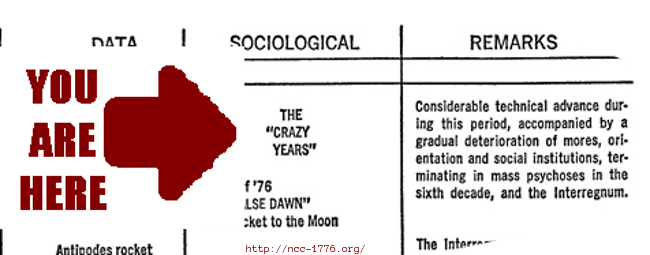
The idea was that the Second Great Depression was this thing that happened nearly half a century from the time I first wrote about it. Part economic crisis. Hence the overall name, but it was never meant as a single event. It was an umbrella name for a massive number of global events that changed the world we know now and paved the way for the world I write in Jack of Harts. Part cultural crisis, especially in America, with a truly “us versus them” mentality taking over and turning violent. The Second Civil War. Part religious crisis that included entire cities and some nations taken over by religious extremists. The Islamic Jihad. Part technologic crisis amidst awakening AIs. The Cybernetic Wars. Part drug crisis amidst the total collapse of the Mexican government. The Drug Wars. Add in a dash of Russian reconquests and Chinese expansion, and you get the building blocks for the world of Jack. Basically, my version of The Crazy Years that Heinlein speculated on in his writings.
A decade ago, when I came up with this vision of the future, I thought this was a really dark near-future version of our history that I really hoped did not come to pass. I did not want to live through a Second Civil War, a Drug War, a Second Great Depression, and an Islamic Jihad all rolled up into a short little decade or two. I did not want to see Russia reconquer Eastern Europe (like Ukraine) or the ex-Soviet Republics (like Georgia). I did not want to see China at war with… India… or conquering the South China Sea and all the islands and nations surrounding it. Seriously. I was looking at trends from a decade ago, and thinking it would really suck if all this went really bad and it all culminated in some nasty conflict a few decades in the future.
Crazy. Right? No one would believe it could go that bad in such a short time.
But I figured it’s far enough out that I can fudge it, and say it just helped build the world that built places like the Republic of Texas into an interstellar power. Along with the Confederation of Dixie, the Republic of California, and the New England Federation. A world that is a bit cockeyed, but still close enough to our own that readers can relate to it.
A decade later, it feels like current events. Crazy Times indeed.
The mayor of Dallas did not accept Fort Worth Joint Reserve Base’s defiance of her lawful orders to arrest their Marine. He had murdered an entire group of peaceful protesters in cold blood, and the “security footage” the base had obviously cooked up and released was just to make the victims look like they deserved it. So the mayor denounced it as exactly that on live broadcast. The United States Marines had been murdering black and brown and yellow and red people for centuries. And Lieutenant Jacob Carter was the perfect example of that. Northern Minnesota pale skin. Bright blond hair. Shining blue eyes. Movie star square jaw. Wielder of the deeply problematic title, Cowboy. He was the very embodiment of white privilege, and it was time the people rose up and told them that their wanton campaign of terror and murder was over. The mayor of Dallas called and the protesters came. They screamed and spat, they threw bottles and rocks, and they showed everyone on all of the networks that the United States military was not welcome in their town. And when night fell, the gangs and the drug cartels and the anarchists came to burn everything down. But the defenders of Fort Worth Joint Reserve Base did not answer to the mayor of Dallas. They were ready when the looters and rioters came.
Fort Worth Joint Reserve Base’s commander recognized the danger the Second Great Depression’s protests, riots, and gang violence held for his military base. And for those personnel who lived off base. Fort Worth JRB was a reserve base, so that was most of them. They had civilian jobs and careers throughout the Metroplex, their children attended nearly every school, and their families shopped at all of the most popular malls. The commander recalled every single serviceman assigned to the base, ordering them to bring their families with them. But even Fort Worth JRB was not large enough to accommodate that large an influx of people. So the commander activated numerous contracts to rent homes, rooms, and entire schools in nearby neighborhoods, and expanded the patrols to cover those areas. It was a technical violation of the law, but the police turned an official blind eye to that. Fort Worth JRB was a bastion of calm in the burning Metroplex, after all. Until the rioters and looters came for them.
Fort Worth Joint Reserve Base housed various Texas State Guard, Army, Air Force, and Marine units when the Second Great Depression came upon us all. VMFA-112, the Cowboys, is the most famous of those units. They had been there for nearly a century, and their reserve status meant they had little of the turnover that line units had. Then their Lieutenant Jacob Carter saved an entire family from gang violence during the riots, and the security footage ended up released all over the networks. They publicly embraced that action as something all Cowboys should aspire to do. The other units on base had a similar history, and greatly enjoyed watching the young Marine in action. They were envious, in fact. The Metroplex was their home. They had no intention of leaving it. They wanted to defend it. That is why Fort Worth JRB had very few of the desertions most other bases saw. That is why they showed a united front to the police the mayor sent to arrest the young Marine. And that is why they were ready when the riots and looters came for them.

Forge of War on Amazon
Angel Flight on Amazon
Angel Strike on Amazon
Angel War on Amazon
Wolfenheim Rising on Amazon
Wolfenheim Emergent on Amazon