San Antonio was the oldest city in Texas, having been founded by the Spanish Empire itself, and Greater San Antonio boasted millions of residents when the Second Great Depression began. It was home to the Alamo, Fort Sam Houston, the Tower of the Americas, SeaWorld, one of the largest rodeos in the world, major sports franchises, multiple Fortune 500 companies, and the largest medical research center in South Texas. You could do anything in San Antonio, from high-class museums, to backroom bars. It was one of the largest cities in America, and had led us out of one recession after another for decades. It was one of the greatest economic engines in America, and the Second Great Depression nearly destroyed it.
I’m tired of talking about which governors are idiots arresting people for parking in church parking lots, shutting down gun stores, or demanding that the common folk respect their authority and not protest when they decry what the little people will be allowed to do.
So…on to better subjects. I just gone done with principle writing on another short story, which takes up unresolved plot points introduced in Forge of War and Angel Flight and ties them up in a pretty little bow. Well, pretty may be an over exaggeration. And tied up can have multiple meanings.
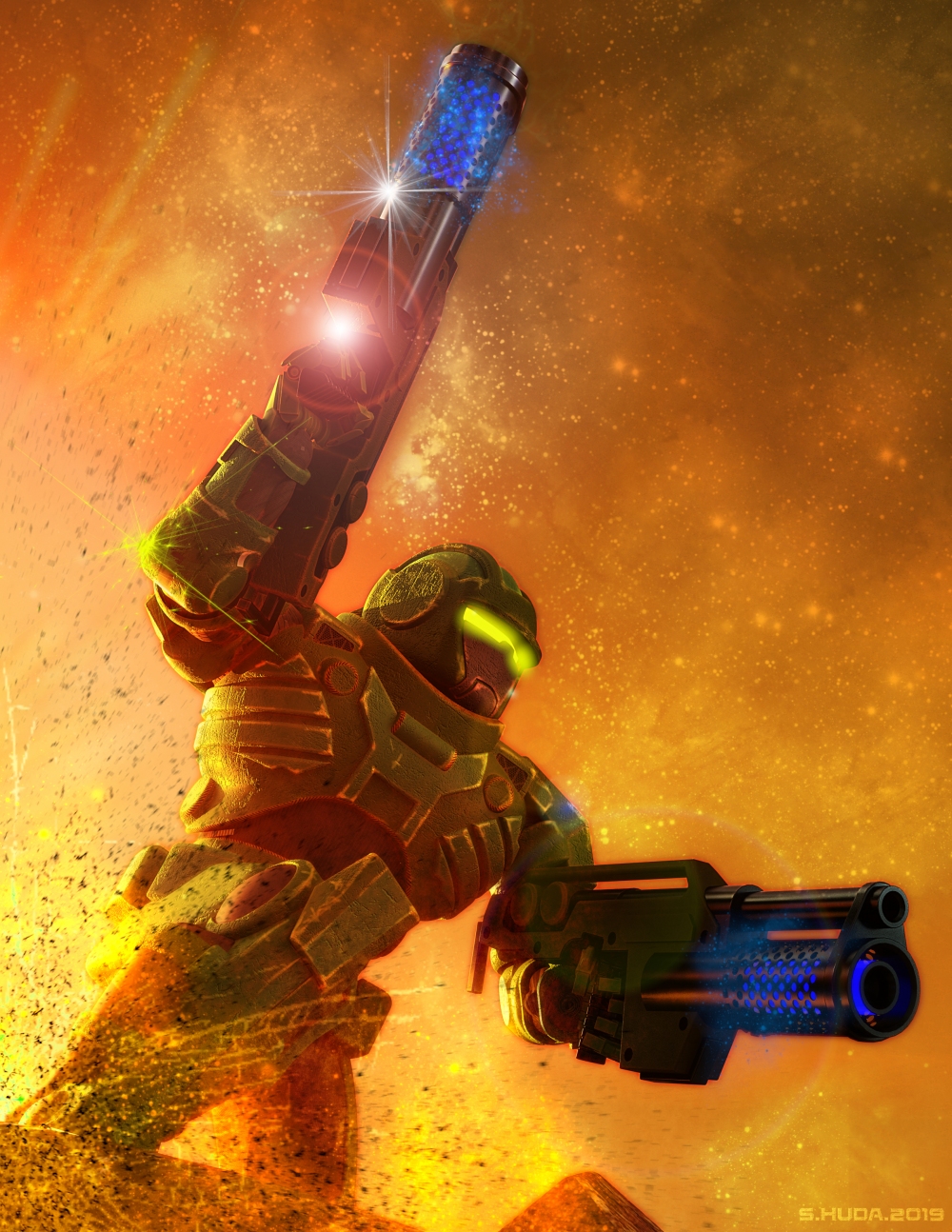
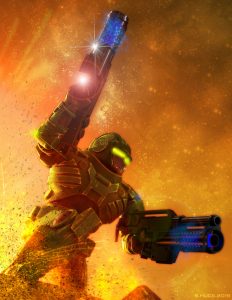
Let’s just say that a certain little green friend Stephen Huda ginned up for me for another story that is awaiting publication will make another showing here. And there will be great fanfare at the little friend’s arrival. If by fanfare you understand that I’m talking about gunfire, explosions, and destruction.
And that’s before the girls get involved. Or after. Or during. Time is a relative thing you understand, but Captain Jack of Hart Squadron would not know what to do if certain girls did not show up from time to time. Or more often. More often is certainly good. You may say that he is devoted on the subject. Maybe even preoccupied.
Anyways, here is a very short preview showing Jack’s frame of mind upon waking up on this fine day…
Jack awoke to a sense of doom ringing between his temples and a ravening hunger filling his belly. Crash landings sucked. Getting shot sucked. Hi-gee maneuvers with cracked bones, healing muscles, and aching ligaments sucked. Being saved by two girls who had no business risking themselves in his life sucked. His life over the last few days had become the one unending succession of suck his drill instructor had promised him his life would be after he volunteered to help kick the Shang’s alien asses to the other side of the galaxy.
Fort Hood had long been a concentration of American armored cavalry warfare that could take on entire nations by itself if unleashed. The budget issues and desertions hampered their ability to live up to that reputation during the Second Great Depression, but they mobilized what they could safely deploy with their reduced personnel. That was more than enough to make them the heart of the Texas armored cavalry that crossed the old border into Mexico to deal with the drug cartels. They were not a good occupation force, as armored units rarely are, but Texas did not send them to Mexico to occupy terrain. Their tanks, mechs, and choppers had the singular mission of bringing maximum destruction to any Drug Lord compound, caravan, or other targets of interest related to them. They excelled at that mission, and many historians credit their involvement as one of the reasons the Drug Wars came to such a swift and successful conclusion. And the fact that they left, rather than attempting to occupy Mexican towns and cities, greatly improved relations between Texas and their southern neighbors. That would be important in the coming years.
Texas had been supplementing Fort Hood’s operating budget for decades under the guise of renting the use of their facilities for Texas State Guard training. Fort Hood’s tanks and mechs were extremely expensive to keep operating, and when the President cut all funding to the fort, Texas expanded their rental operations on base lands to keep as many of them running as possible. When the new American President ordered Fort Hood to arrest Governor Lopez and his entire incoming government, as well as the outgoing Governor during the official transition of power, he found that he had no more sway with the base. Fort Hood declined to follow the Impeacher in Chief’s orders. More and more of the American military followed their example and slipped through the President’s fingers as the months went by. Many simply deserted and went home, but a generous portion of them found that States like Texas were far more worthy of their loyalty.
Incoming Texas Governor, and former American President (Impeached), Lopez moved his transition team to Fort Hood as Austin’s police collapsed under the assault of gangs fighting for turf, drug cartels fighting for market share, and racial mobs burning down one neighborhood after another. The outgoing government would soon follow his lead as the violence spread to most other major Texas cities by the end of the year. The official transition of power, when it finally happened, was a short ceremony, with little pomp and circumstance, performed on one of Fort Hood’s practice yards. Many blamed the outgoing Governor for the violence spreading throughout the State, though Texas would later obtain proof that it was federal agents spawning much of the chaos. Incoming Governor Lopez had suspicions on the matter and did nothing to suggest he blamed the outgoing Governor, but did promise to do everything he could to quell the violence. He started by authorizing the forces at Fort Hood to help deal with the drug cartel problem. The Army could not act as law enforcement inside America due to the Posse Comitatus Act, but it just so happened that Mexico was outside the American borders at the time.

Forge of War on Amazon
Angel Flight on Amazon
Angel Strike on Amazon
Angel War on Amazon
Wolfenheim Rising on Amazon
Wolfenheim Emergent on Amazon