Bludworth Marine was a leading maintainer, recycler, and refurbisher of old wet navy warships in the later half of the Twenty-First Century. But as the nations of Earth went to space, they sought to expand into that new and growing market. They focused their Brownsville facility in that direction, and Bludworth Space Marine soon unveiled the first of their new products to civilian and military buyers. Unlike other craft that required elaborate towers and launch facilities in carefully pre-selected regions, their entrant into the market could set sail from any port in the world. Then it could launch itself into space without leaving any part of itself behind, as God and Heinlein intended spacecraft to be. It could land in any body of water, allowing it free access to the largest runway on Earth. The three-quarters of it that is water. The Republic of Texas Navy was quick to purchase the innovative design, and many other navies followed their example.
Bludworth Marine quickly became the Republic of Texas Navy’s largest supplier of new and recycled oceangoing ships. They refurbished numerous old United States Navy warships for Texas, like the retired Wasp-class amphibious assault ship that had spent the previous decades languishing in the Beaumont reserve fleet. Texas renamed her Ranger and sent her out to patrol the gulf waters against all enemies, foreign and domestic. She did not end up fighting the United States Navy, which did its best to stay out of the disagreements between the Federal and State governments of the time, though did support numerous operations against the Mexican drug cartels. Most of her original air group came from the Marines of Fort Worth Joint Reserve Base, and when it came time for America to stand up to China’s advance against Australia, Ranger led the Republic of Texas contingent. She carried Cowboy F-35s and Ospreys into the standoff, and participated in the final strikes against the Singapore Collective. Ranger then returned home to serve as the Texas flagship for decades to come, proof of Bludworth Marine’s superb capabilities when it came to rebuilding and maintaining the aging warships that served most of the American States in those days.
The Houston riots ravaged most of downtown Houston during the Second Great Depression. The mayor ordered the police to leave the “peaceful protesters” alone, and one of the largest cities in America burned in the riots that followed. The State of Texas had many calls for its attention, but it did send a Texas Ranger to Houston when Bludworth Marine asked for help to secure its facilities. The man lived up to the old tradition of “One Riot, One Ranger.” He deputized the dockworkers to protect them from local prosecution, and then led the posse that stopped the rioters short of the docks, yards, warehouses, and other infrastructure that ran up and down Houston’s massive waterfront. The Republic of Texas would use that to build Naval Station Houston into the single largest military naval reservation in all of Texas.
Bludworth Marine was the largest owner of naval construction and recycling yards in Texas when the Second Great Depression came upon us all. They owned multiple port facilities on the gulf coast, and competed successfully in the civilian shipping market. They also held contracts with the Texas State Guard to perform long-term maintenance and end-of-life recycling on many of their gulf and coastal ships. When Texas began looking to expand their navy into something that could compete on the global stage, they knew Bludworth Marine and its various competitors would be critical to their success. So the call went out, the call was answered, and Bludworth Marine instantly went to work building the quasi-private/public industry that would revolutionize the Republic of Texas Navy.
Texas had few State-owned naval yards when the Second Great Depression began. They had long relied on private enterprises to support their small number of State Guard ships, and the Federal government had long since abandoned all major naval bases in Texas to favor major Western or Eastern Seaboard ports. Texas needed to remedy that situation if they were to support a Texas Navy capable of doing anything more than patrolling the rivers or the shallow gulf waters. So they contacted the major private yards and ports scattered over their coast in hopes of building that capability. Bludworth Marine was eager to explore such a new relationship, and returned the call with nearly indecent haste.
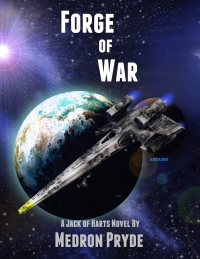
Forge of War on Amazon
Angel Flight on Amazon
Angel Strike on Amazon
Angel War on Amazon
Wolfenheim Rising on Amazon
Wolfenheim Emergent on Amazon