
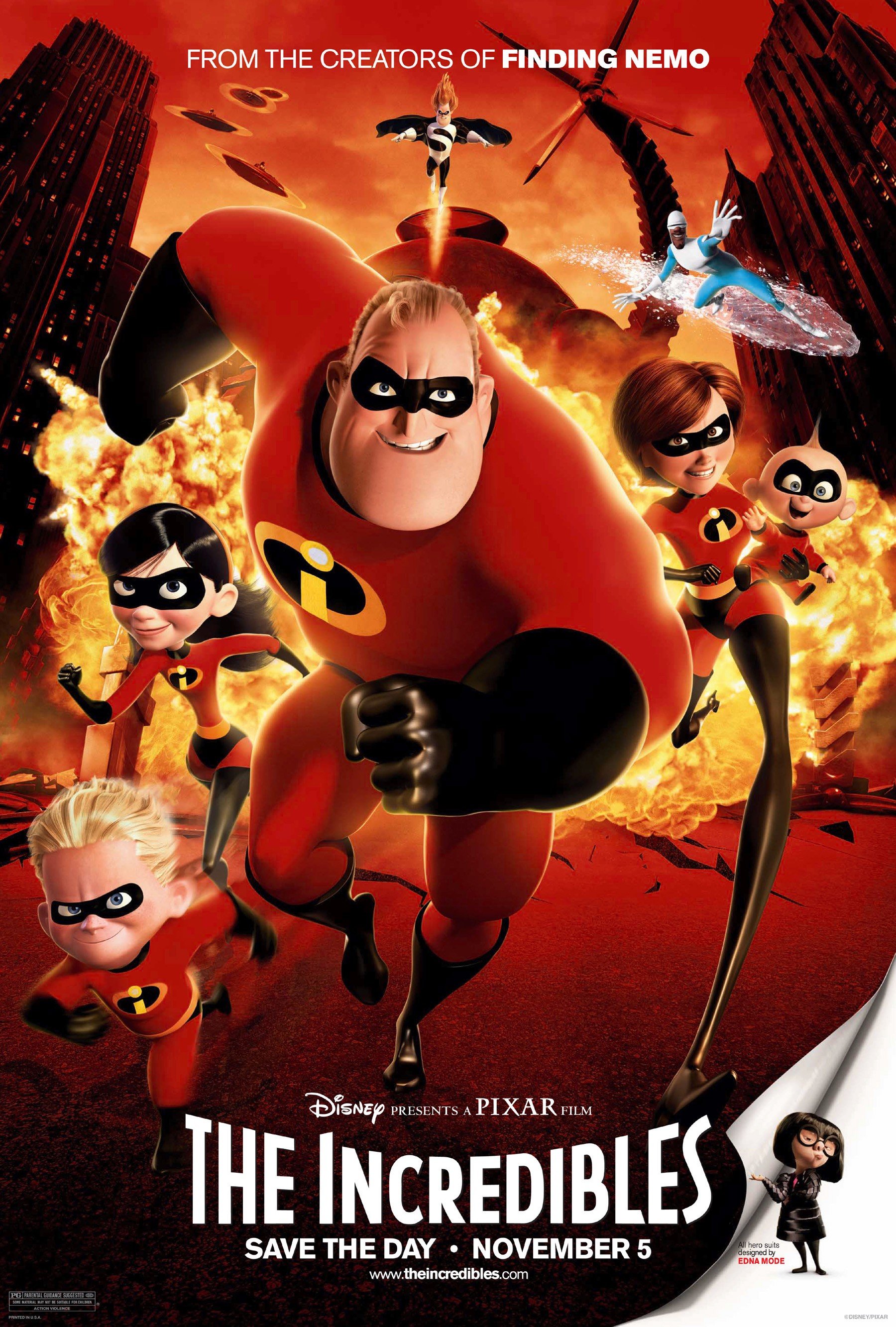
I took an easy time to watch The Incredibles and The Incredibles 2 this weekend. The Incredibles came out fourteen years ago and blew open the superhero genre to many non-geeks. For those who don’t know, The Incredibles is placed in a universe where some people are supers. Marvel and DC jointly own the name superhero, so they couldn’t use that. Hence the shorter “supers” to denote those who have gifts and abilities above and beyond normal humans. For decades supers generally fought to help people. There were villains of course, but there were always heroes to fight them and protect the common people from their villainy. Three of the most popular heroes were Frozone, Mister Incredible, and Elastigirl. You can guess Frozone and Elastigirls’s powers. Mister Incredible was basically a toned down superman who’s incredibly strong, incredibly difficult to injure, and far more incredibly intelligent than most would think upon looking at his bulk.
Part of the prelude to the story is that one day he saved the life of a guy trying to commit suicide. The guy still got injured a little bit and sued Mister Incredible for ruining his death and injuring him for the rest of his life. The guy won and more people began suing for damages caused by supers who were just saving lives. The lawsuit costs began going skyhigh and the government ended up banning all supers. They sent the supers to super witness protection where they would live out the rest of their lives in normal jobs acting like normal people and forgetting the glory of what they had been.
The meat of The Incredibles begins some fourteen years later with Mister Incredible working in an insurance company cubicle farm where his job is to deny every claim of people who have been injured and need help. Where he gets in trouble for approving claims or telling his clients how to cut through the red tape. Where his boss gets off on yelling at him for daring to help people. You may guess that Mister Incredible hates his job with a burning passion. But he grits his teeth and goes to work every morning because his wife, Elastigirl, and his three children need the money to live and to keep their cheap little cars running. Then one day he is approached by a secret organization that needs Mister Incredible to do something…Incredible again. And that sets up the story of anger, hope, betrayal, and loyalty that is The Incredibles. One of the best superhero movies ever made.
It also has what I consider to possibly be the best scene in superhero movies ever made. About two thirds of the way through the movie, two of the kids are in a fight with the bad guys where they are using their super talents to avoid being killed. They spend what feels like several minutes running around and using trickery and such to take out several bad guys trying to kill them. It’s not too long. It’s not too short. It’s just right, showing the kids getting accustomed to using their powers after a lifetime of being told it was wrong to do it. And they’re winning. They’re outnumbered. They’re outgunned. But the bad guys keep missing them and they keep taking the bad guys down one after another. It’s an awesome scene of siblings learning to work together to save themselves.
And then the parents show up. Mister and Mrs. Incredible swoop in out of nowhere and they are…Incredible. They work together in perfect unison to whip and punch the bad guys threatening their children in a matter of seconds. They finish in each other’s arms as explosions fill the background behind them and their kids look on in awe at the parents they never realized were so…Incredible.
And that, boys and girls, is a crowning moment of awesome. That is the movie in a nutshell. There’s much more to it, and it includes the entire Incredible Family and their old friend Frozone coming together to save the world from villainous villainy. They walk publicly through the streets again and the people cheer them on. Cut to black with a snippet of the family going into action against another villain and we’re done. The Incredibles are off to save the day again and the world is good.
The Incredibles 2 starts in that moment and everything changes. Supers weren’t outlawed because a random suicide got stopped. They were banned because Mister Incredible was a blunt object who punched his way through everything and caused massive amounts of damage while acting Incredible. Elastigirl was a smooth operator who never hurt anyone. Politicians don’t trust people who want to help for no other reason than they can and so they shutdown the super protection program and leave all supers flying in the wind. A secret organization approaches Elastigirl alone to come forward and help rehabilitate supers in the eye of the public since her husband and Frozone are too apt to cause catastrophic damage.
Her family is forced to live in secrecy, hiding their powers as Elastigirl goes out to be a secret agent super on the trail of villainy. She breaks the law to show that the law that forces her family to hide who they really are is wrong. Mister Incredible fights the battles of learning New Math, an angsty daughter who’s discovered boys, and a baby who is starting to manifest MULTIPLE RANDOM power sets that he has little to no control over. Mister Incredible actually survives the experience, which is more than I expected from the buildup.
I won’t spoil the rest. It’s a good movie all in all. I enjoyed it. There are more characters, more supers, and more fantastic fights. But there’s less of a focus on what made the Incredibles so…Incredible. The entire movie was focused on keeping The Incredible Family apart. Even the final climax had them going off and doing their own things alone. And that misses the entire point of the movie in my opinion.
The Incredibles are Incredible together as a family. I give them two Incredible thumbs up without a second thought. It’s one of the best superhero movies ever made. And it’s just plain a good movie. The Incredibles 2 gets one thumb up. It might be an even better movie in many ways than the first. The story is certainly more…concrete. More relevant to our world in many ways. I just didn’t enjoy it as much. I wanted Incredible. I got…I don’t know what I got. A sequel that started by tearing down the accomplishments of the first movie. And as a storyteller, that bothers me.


 Forge of War on Amazon
 Angel Flight on Amazon
 Angel Strike on Amazon
 Angel War on Amazon
 Wolfenheim Rising on Amazon
 Wolfenheim Emergent on Amazon