
I have now read the book Altered Carbon and have seen the first episode of the Netflix series Altered Carbon. I would call both futuristic dystopia, much like Blade Runner or Ghost in the Shell. The basic conceit of Altered Carbon is that every human is given a “data stack” upon birth that is implanted in their spinal column and saves everything they see, learn, do and everything. The stack is their backup, and in fact by the time of the novel it is the only thing people think of as them. Their bodies are “sleeves” they wear that can die, but human life is immortal. Real Death is rare for most people, because their stack can simply get a new sleeve and continue to live. Or they can spin up inside a virtual reality and live whatever dreams they can afford.
Of course this is a dystopia, so it is not all roses and lilacs. Since damage to a sleeve doesn’t actually cost human life, people care much less about “organic damage” and the like. Except of course for those backward, stupid, bigoted, hateful, descendants of authoritarian regimes that killed millions and enslaved humanity for centuries. When they die, they really die, because they don’t allow their stacks to be spun up again because that would be a sin against God. If you heard all of that and instantly thought of the Catholics, then you win the prize. The author seems to have a general dislike of all religions, considering one of the nastier torture scenes includes a young Arabic woman and some virtual Muslims, but it appears he has a special hate on for the Catholics. They appear again and again in the story, and the point that it’s good thing they’ve written themselves out of the future of mankind by refusing to be reborn is rather belabored.
I actually liked most of the novel. It shows a very interesting vision of a future we might be able to create if we can get the basics down. Full memory backup. Bioengineering new synthetic bodies to order. Technological upgrades for better reflexes and strength. And what is actually a very good “who dun it” story line featuring a suicide that the deadee says couldn’t have been a suicide. Because he was rich enough to have a satellite backup, and if he’d really wanted to kill himself, he wouldn’t have bungled the job so badly as to leave that backup alone while blowing his head off. So he arranged for our hero of the hour to come to Earth and figure out what really happened. You see the hero is a veteran of a special military unit trained to swap sleeves often and to see everything around them in ways that would make Sherlock Holmes jealous. It’s a good story.
Unfortunately, it’s not the only thing in the novel. There is police violence so common, indifferent, and heavy handed that it makes the Black Lives Matter protests pale in comparison. And the various sex scenes would make John Ringo blush. Oh John Ringo Yes, I did go there. Seriously, I’ve read every John Ringo book. Including the books that coined the phrase Oh John Ringo No. There are scenes in Altered Carbon that disturbed me more than any of those. It is seriously dystopic, and there are reasons I tend to dislike dystopias. The way they play down the humanity of people, or other living things, is one of them, and Altered Carbon stamps that in real hard.
I haven’t seen enough of the Netflix series to know what it is like, though the first episode seems fairly similar to the first chapter or two. Some major differences in tone and background, but much of the same pattern. The hero is the last of his kind, some society of warrior monks or something killed off centuries ago. Only he remains. Some other differences too, so I don’t know how much the Netflix series delves into the darker parts of the novel. For now I’m leaving my verdict on that up in the air.
I guess I just wish I could read more stories that could have come from greats of Science Fiction. Niven. Clark. Asimov. The stuff I grew up reading. They didn’t try to browbeat the reader with the evils of religion, because they knew most of their readers would have at least a passing relationship with religion. I wish more writers would give us that now. The hopeful looks of the future that they gave us.
Altered Carbon is not that, so I am off to reading something a little lighter by some guy who famously can’t finish a series because he keeps coming up with new “oh, but I could do this” ideas and books. And if the first name that came to your mind when I said that was David Weber, you get a prize. 😉


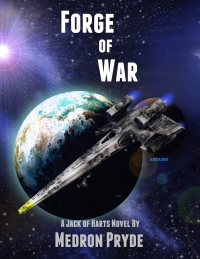 Forge of War on Amazon
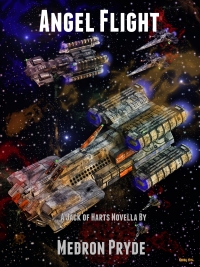 Angel Flight on Amazon
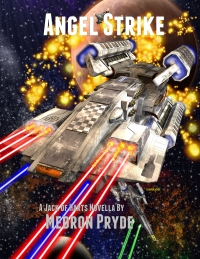 Angel Strike on Amazon
 Angel War on Amazon
 Wolfenheim Rising on Amazon
 Wolfenheim Emergent on Amazon