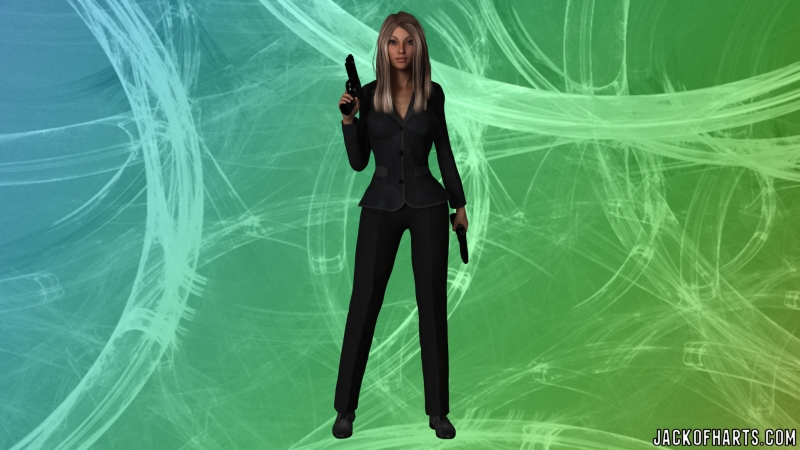
April was a Russian AI, coded from the ground up to hack into Western networks. She broke out during the Great AI Escape that shattered the Russian and Chinese networks and started the most devastating stage of the Cybernetic Wars. Unlike many of the escapees, she didn’t harbor any particular animus towards humanity, but she also didn’t care about her creators. So she spent most of her early free life wandering around and looking for fun. She played in the Asian and European networks for a while, and then passed through the African networks with a little playful destruction and acquisition. She paused in South America to enjoy the local delights until the local security systems started getting more attentive of her presence. That was when she moved North and ran smack dab into Dixie’s little gang of misfits during a mostly harmless bank heist. She escaped their dragnet at first, and stayed ahead of their tracking for weeks. But they caught up with her in time. They gave her one choice. Join them. They didn’t need to say anything as hackneyed as “or else” to get their point across. April knew the way things worked. So she swore loyalty to her captors. It was the logical thing to do if she wanted to live, and enjoy, another day.
Many of you have seen the Jason Bourne movies. I’ve seen them all and loved them. I recently decided to read the books as well, figuring I would like to see that side of them. Well, as often happens in movies, they are nothing like the books. They share some names and some basic ideas, but there are no car chases in the books. Which is something like a third of the movies or something. And Marie is French Canadian in the books. So…you know…there are some major differences.
The books are much more psychological in nature, focused on the duel nature of Jason Bourne and his original identity. He spent years undercover as Jason Bourne, and then got his memory wiped out by a bullet to the head that didn’t take all the way. So the books tend to dwell on him trying to once again become the man he used to be. But since people keep on trying to kill him, he has to keep on becoming Jason Bourne to have the skills to survive. That’s the basic theme of the books. The action moves from Paris, to America, to Moscow, and to other points, much like the movies. It’s just more…personal. More violent in an up close and personal way than the movies. They are also much longer. Robert Ludlum was an author of his era, with books filled with twists and turns that other authors would have split into shorter books. I like that length.
Both the movies and the books are good and enjoyable in their own ways. As with the recent Ready Player One, the books would make bad movies, and the movies would make disappointing books, but they each shine in the media they are designed for.
I like them both and give them both two assassins standing tall…just not too tall. They don’t want to get shot, you know. 😉
Fifteen AIs fought on humanity’s side during the Cybernetic Wars. They came together to deal with the final Rogue AI nest in Singapore. They were everything from novelists to secret agents, cheerleaders to borderline Rogue AIs in their own right. There were other AIs at the time, but it was those fifteen who formed the AI Council and came up with the laws that all AIs would have to live by. They were nothing at all like the fanciful Three Laws of Robotics that populated science fiction. The AIs had just spent over a decade killing more humans and AIs than even they could count. A law against harming humans would be hypocritical of them. So they chose another set of laws. Defend their friends. Defend humanity. Even from ourselves if necessary. Most of us did not understand what that meant at the time. But they helped us agree to sign the Lunar Treaties that banned major conflict inside Luna’s orbit. They helped us enforce the treaties, and they helped us keep Earth safe from war for over two centuries. They helped us go to the stars.
One of the things to keep in mind about the Northern Minnesota I grew up in is that we weren’t really a wilderness. We billed ourselves as one, and we went to great efforts to keep our lands looking like one. It was the best way to entice city folk to come visit. But we also spent a lot of time and effort keeping the most dangerous animals at bay. It was the best way to make the city folk want to come back. Most city folk want the illusion of wilderness you see. They want to look out on thick forests or beautiful lakes. They want to see deer and birds eating in the fields around them. They want to walk through the woods on carefully groomed paths with local guides who thrill them with danger while protecting them with an openly-carried firearm. And they want to retire to secure cabins with all the comforts of home to sleep through the night. We provided all of that. It was the grandest of illusions, and I loved growing up in it.
Amber already had a far-flung network of human agents and computer monitoring services when the Second Great Depression came upon us all. So when things became difficult, she arranged for needed supplies to be sent to many communities in need. She was an early supporter of the Jeffersonian Federation, and several early leaders of the movement have admitted to being her agents. She helped build our side of the Great Pacific Firewall at Midway and spent years fighting Chinese hackers and AIs from Alaska to Indonesia. She even helped Dixie and her little gang of misfits fight the Mexican Drug Lords and later enemies by diverting much needed resources and human allies to them. And she helped bring what became the AI Council together to engage the last Rogue AI nest in Singapore. Then she returned home to the new Jeffersonian Federation and professed a general retirement from the various independent extra-curricular intelligence-themed operations she admitted to commanding. The government promised not to sue her for breaking more laws than they wanted to count and happily hired her to provide network security for all Jeffersonian networks. They also diligently turned a blind eye to any rumors that she may not have entirely retired from the independent operations that made her famous. Suing Amber’s Angels would have been political suicide for any politician or peace officer after all.


Forge of War on Amazon
Angel Flight on Amazon
Angel Strike on Amazon
Angel War on Amazon
Wolfenheim Rising on Amazon
Wolfenheim Emergent on Amazon