The first true interstellar rocket ships the Branan built mounted disposable rocket engines that could perform a steady burn at one of their standard gravities for a few of our months. That was enough to accelerate up to nearly five percent the speed of light, which is real speed on an interstellar scale. The closest binary star system to Betelgeuse was only a couple decades away at that speed. They would turn around after their first burn period and use the depleted rockets as a meteorite shield during the decades long trip across interstellar space. Then they detached the rockets, engaged their own internal engines, and decelerated back down to match speeds with the local stars and their planetary systems. Improvements in fuel efficiency over the decades and centuries that followed allowed them to accelerate for longer periods of time until they could finally achieve one tenth the speed of light. Even their furthest star was only three decades away from home at that speed. Only. It was a good thing that the crew and passengers slept most of the way.
Jewel spent most of her first life being a Hellcat starfighter. Her name was Mercedes back then, and she was the very image of an old fashioned courageous aviator. She resigned after Olivia’s court martial and let her old identity fade away. I was rather surprised the first time I saw Jewel. New obnoxious hair. New tie dyed shirt and painted on jeans. The girl that had once been military recruitment poster material looked more at home in a hippy commune when she walked up to me that first time. It was an amazing disguise. It was all the more amazing because she lived it. I remember her the way she was before. Quiet. Solid. Professional. Jewel is nothing like that at all. Jewel is loud. Jewel is flighty. Jewel is aggressively casual about everything. It’s like she decided to be someone else and just…changed everything. And that is the secret to her success. I don’t think Jewel is a disguise at all. She’s just as real as Mercedes ever was. And that brings up some interesting questions about the nature of cybernetic life.
Each of my pilots came to Wolfenheim under a pseudonym. John Smith. John Jones. Jackie White. All very common names, I assure you. Most common names in America, if you’re wondering. Who would ever question a collection of such fine American names? John Anderson was the fourth, and unlike the other three, I knew exactly who he was from the very beginning. He had commanded the fighters that flew off Los Angeles for years, and retired upon seeing the disgraceful court martial that ended Olivia’s career. His first step was to find a truly obnoxious new outfit for his civilian life. Then he went to a barber and got some new hair. And then he walked up to me, assaulted my poor eyes with his new outfit, and informed me he was joining Wolfenheim. He didn’t ask to be part of the project. He didn’t volunteer. He simply gave me his (new) name, showed me his absolutely perfect (faked) ID, and told me he was joining. It is times like this that make me wonder if my people truly understand who is in charge around here.
The Branan spent centuries fully colonizing all six star systems of the greater Betelgeuse system, but they were looking further out all that time. They sent probes on the long treks to stars five, ten, fifteen, or twenty lightyears away in search of worlds that could sustain them. They found worlds ready for them under many of those stars, but the ones they found most useful to their purposes were those with multiple stars orbiting each other. Those with multiple gas giants and planetary populations orbiting them went to the top of their list for future colonization. And by the time they were ready to send their first colony ships beyond the influence of Betelgeuse, they knew where every rock lay within twenty lightyears of their home. They picked a trinary star system six lightyears away and, five hundred years after the Albion left, the Branan followed them to the stars on a plume of rockets’ red glare.
Those of you who pay attention to science fiction may have heard that the new Star Trek series has boycotted God. Seriously. The word God is no longer allowed. They say that is in reflection of Gene Roddenberry’s vision. The problem with that argument is that God has always been part of Star Trek. Religion and faith have been there since the very beginning.
In one episode of The Original Series, Kirk met the actual Greek god Apollo and told him we had no need of him. That one God was quite adequate. In another episode, they visited a world where a Twentieth Century Roman Empire reigned supreme and they worshiped the Son of God. And do I even need to mention Star Trek V: The Search for God? What about Next Generation’s Q, a being who certainly thought himself a god and wished us to worship him. And then there was that little sideplot where DS9’s Sisko became the Emissary of the Gods of Bajor.
God, Religion, and Faith have been integral parts of many of our best stories. The original Battlestar Galactica and Babylon 5 touched or wallowed in these concepts, and it made them richer for it. And many other great science fiction stories in print and video alike have wrestled with those concepts.
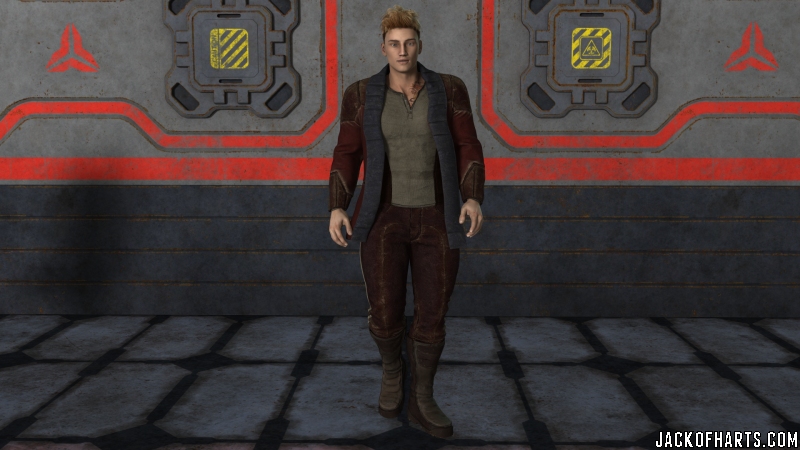
God, Religion, and Faith are part of my Jack of Harts universe. Jack himself is a…wayward Christian. He was raised in the church but…well…like many young adults he has gone a different path. He didn’t precisely reject his faith, but he certainly lost it over the years. Malcolm and Charles are two men raised by Great Families who did not believe in God. They were raised as princes of the universe who need hold no other gods above them. And their mentor, long ago sent packing for the cardinal sin of not believing in the greatness of the Families, became a Christian pastor and began a new life of service to humanity. Their faiths, or lack thereof, are recurring themes in my stories.
God, Religion, and Faith are part of our culture, and ignoring them does a disservice to the stories we wish to write. What is humanity without God? Without religion? Without faith? Communism answered that question for us in the real world. The Hunger Games are a fictional example of how low humanity without decency and faith can fall. I can think of few things worse than a society where they are banned…dismissed…boycotted.
And so I write stories about a future where we did most things right. We created a world we would want to live in, not simply one that makes for exciting stories. A world where someone can grow up in peace. A world where, in their own ways and despite the trials they all went though, the main characters all found a good path to adulthood. My world is no Utopia, but it is far closer to that than a Dystopia.
We still have faith in the ultimate decency of humanity. And that faith is the central conflict of my stories. The Alien Shang do not share our faith in the decency of our humanity. We are a threat. We are not worthy. And so it is up to our brave heroes to stand up and not go quietly into that night. To have faith in themselves, their friends, and many they’ve never met.
And that is where I borrow another of Gene’s old rules. Members of Star Fleet did not fight one another in his vision of humanity’s better future. And in my stories, the Cowboys do not fight each other. They have their faults, but they are the best of us. They are the ones with the courage to stand forward, to volunteer to defend those who do not or cannot. They are a team, standing side by side in defense of the civilization behind them. A civilization we could be if we do more things right than wrong. If we create a world we would like our children to grow up in.
I have faith that we can do that. And so I write it. And so I hope you read it.


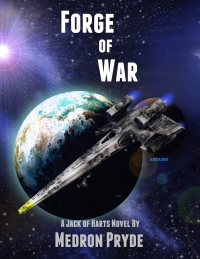
Forge of War on Amazon
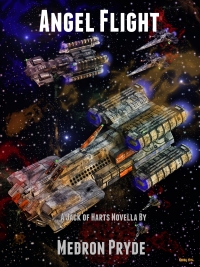
Angel Flight on Amazon
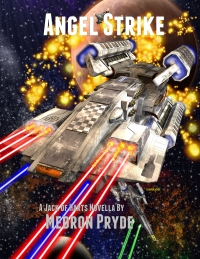
Angel Strike on Amazon
Angel War on Amazon
Wolfenheim Rising on Amazon
Wolfenheim Emergent on Amazon