
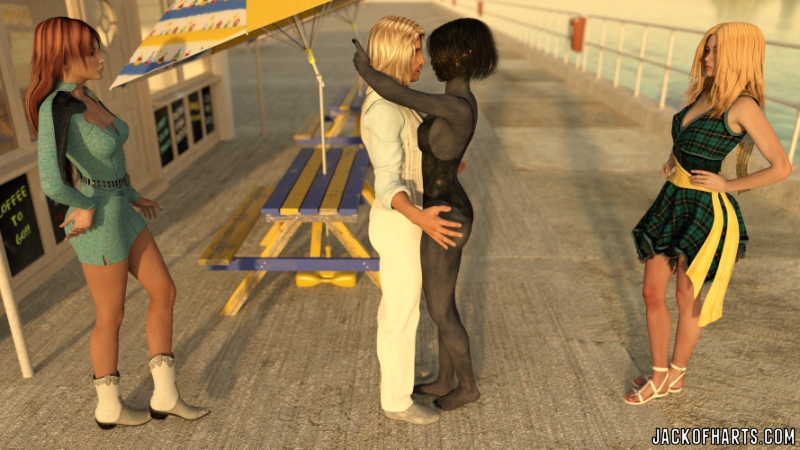
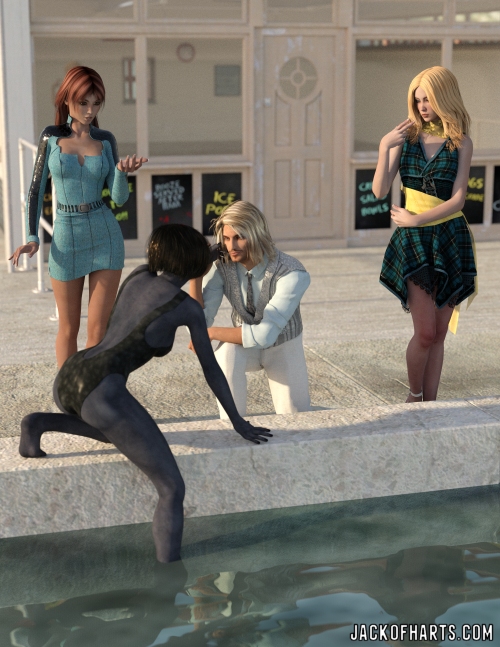
“Are you here to stay?” she asked and I started to remember her. When I last saw her she had brighter hair and less swimsuit. She’d been one of the few Arnam that stayed through the Minnesota winters. We’d gone to school together. We’d partied together on hundreds of lakes and beaches on both sides of the border. And then the Shang dropped Yosemite Station all over America.
“I thought you died,” I said in confusion and she laughed as I stepped away.
“They missed,” she returned with a shake of her head and followed me with a determination I remembered very well. “And then I helped rebuild.” She stopped and spun around with a familiar laugh. “It’s just like we remember isn’t it? It’s paradise, Jack! Like the Shang never came.”
I had to sigh at that. “But they did come. And nothing’s really ever the same again once you lose it.”
That was when she stepped up and wrapped her arms around my neck. “Maybe not the same, but we can make it better, Jack. Can’t you stay? It’s good here!”
It was the second time she’d asked me a question I couldn’t answer. She was right of course. About everything. But I wasn’t the boy that left this little town twenty years ago. I’d dreamed of coming back. Worked so hard to break the Shang precisely so I could. And now I looked at her and started to wonder for the first time if I could ever really go home again after everything I’d seen and done.


 Forge of War on Amazon
 Angel Flight on Amazon
 Angel Strike on Amazon
 Angel War on Amazon
 Wolfenheim Rising on Amazon
 Wolfenheim Emergent on Amazon